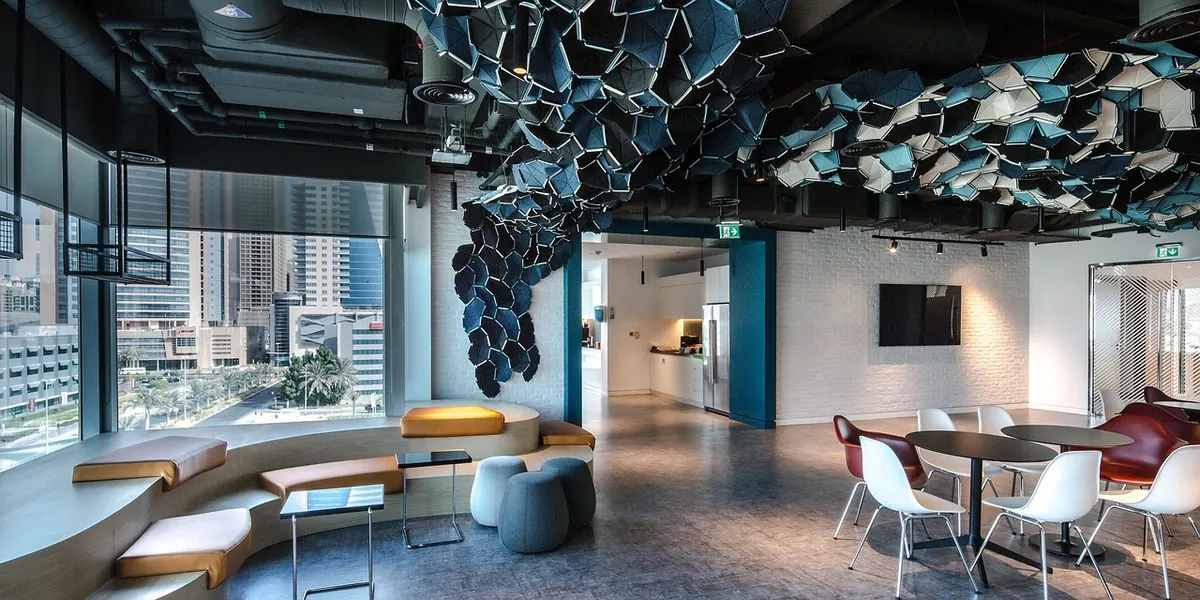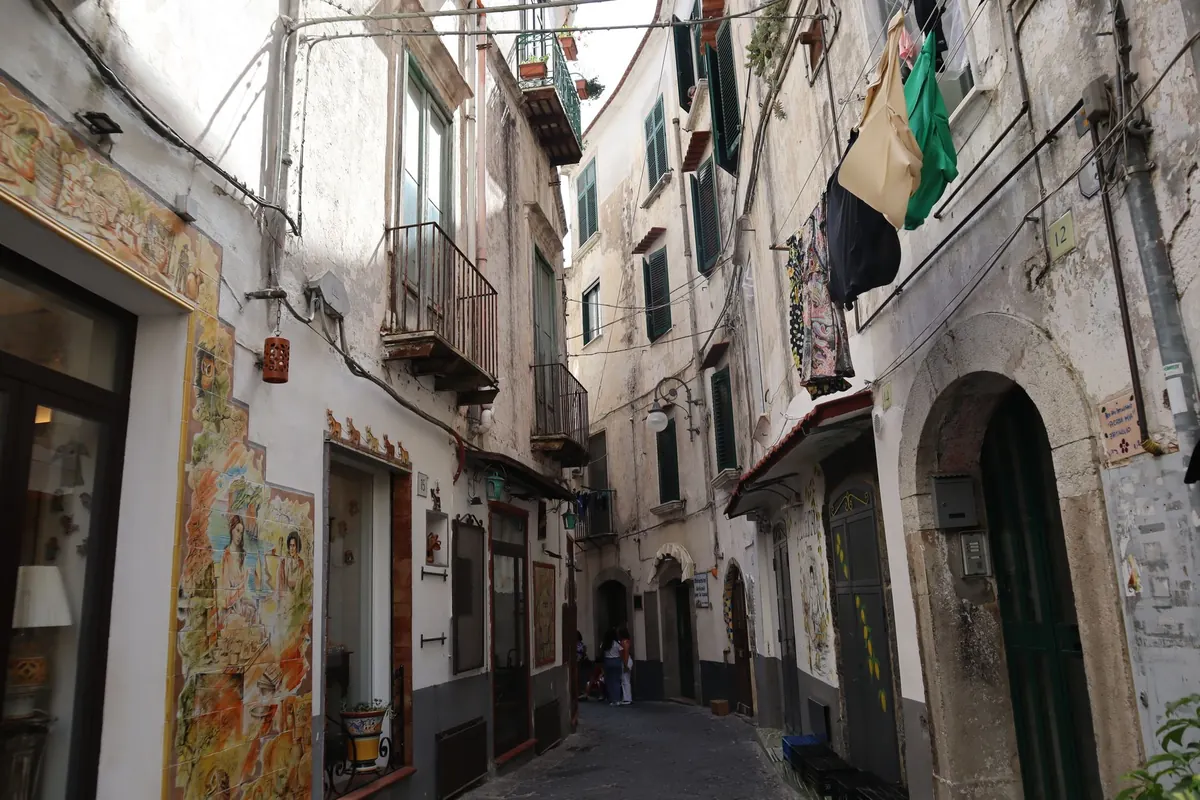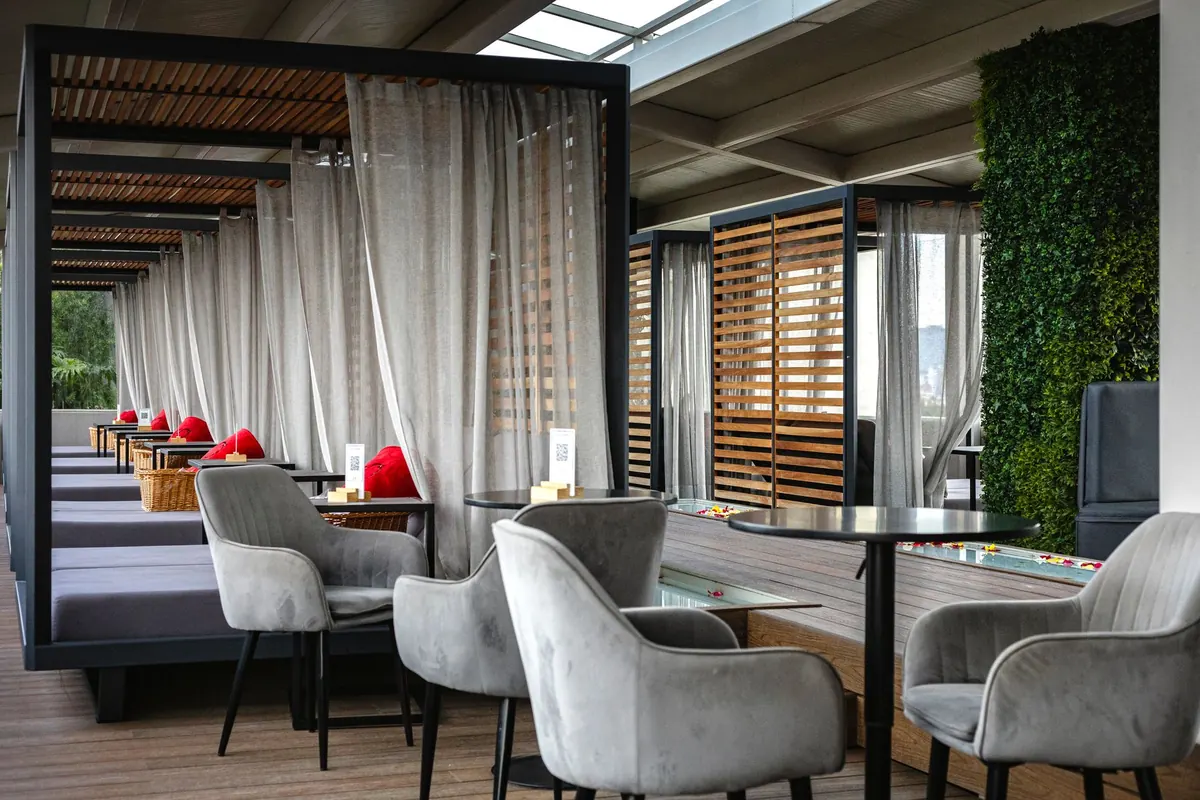
Photographs of a lounge tend to flatter it. A wide lens makes a small corner look like a ballroom; a lamp placed just so hides the fact that the sofa opposite is the one nobody sits on. So rather than a greatest-hits gallery, the images of Salotto Della Torre are arranged the way you would actually walk the house: from the door you come in through to the room you will probably still be sitting in at midnight. What follows is a guide to each space — what it feels like, when it works best, and how to use it without getting in the way of the room itself.
The Arrival Lounge: The First Ten Minutes
This is the smallest of the public rooms and the one most people misread. Low ceiling, a pair of deep armchairs facing each other, a coat stand that leans slightly to the left, and a side table that has held the same brass tray for as long as anyone can remember. There is no reception desk in the usual sense; the check-in happens at a narrow counter tucked behind a half-wall, which means the room stays quiet even when three parties arrive at once.
Use it for what it is: a threshold. Ten minutes with a glass of water, a look at the plan of the house, a word with whoever is on duty about dinner timings. The armchairs are comfortable enough to be a trap — guests who sink into them on arrival often stay for an hour and then feel they have missed the rest of the building. Bags go against the wall to the right of the coat stand, not in the middle of the floor, and the small bench under the window is the best place to wait if you are early and the room is full.
The Long Salon: Where the House Does Most of Its Talking
The main lounge runs nearly the length of the ground floor, and it is the room most of the gallery images are devoted to. Morning light comes in from the courtyard side and lands on the first two seating groups; by late afternoon the light has moved to the far end, where a long table sits under a pair of pendants. That shift changes the room completely. The photographs taken at eleven and at six could almost be of two different spaces, which is exactly why it is worth looking at both before you decide where to sit.
The seating is arranged in three loose clusters rather than one big circle, and this is deliberate. Each cluster holds four to six people comfortably. If you are a group of two, take the cluster nearest the fireplace in winter or the window side in summer; if you are a group of eight, do not try to merge two clusters by dragging chairs across the floor — the parquet complains, and the room loses the thing that makes it pleasant, which is the sense of several small conversations happening at once without competing.
Best Uses
- Late morning: a newspaper, a coffee, the window cluster. The quietest hour in the house.
- Before dinner: the fireplace cluster, from about seven. This is when the room is at its most sociable.
- After dinner: the long table at the far end, which is where groups tend to end up and where a low voice carries further than you think.
- Not ideal for: calls. The acoustics are kinder than they look, but not that kind.
The Courtyard Lounge: Open Air, Cooler Hours
Through the terrace doors at the end of the Long Salon, the courtyard is the room the gallery photographs least fairly, because a still image cannot show you the change that happens around dusk. Stone underfoot, planters along two walls, a fig tree that shades the northern corner until early evening, and lanterns that are lit by hand rather than on a timer. In the middle of the day in summer it is bright and slightly stark. After seven it becomes the best seat in the building.
Cushions live in the chest by the door — take what you need and put them back, because the courtyard catches weather that the rest of the house does not. Seating is arranged for four; six works if you bring the two folding chairs from the wall, eight does not. The one practical warning is sound: voices travel straight up the walls and into the windows above, so if the conversation is going to run past midnight, move it back inside to the Long Salon. Guests who ignore this are usually the ones who wonder why the house feels cool towards them at breakfast.
The Mezzanine Reading Room: Quiet, and Genuinely Quiet
Up half a flight, past the landing with the tall clock, the mezzanine is the room for people who want to be in the house without being in the middle of it. Bookshelves on three sides, four individual chairs, two small tables, and a desk in the corner by the window. The ceiling is lower here and the sound is muffled by the shelving. It is the only public room where a laptop is unremarkable.
The Desk Corner
One person at a time, by convention rather than rule. If you need it for a call, the window desk is the least disruptive spot in the building — better than the Long Salon and far better than the courtyard. Keep calls under fifteen minutes and step out onto the landing if the room is occupied.
The Reading Chairs
Take a book from the shelves and put it back where you found it; the arrangement is not alphabetical, but it is not random either. The chair furthest from the stairs is the warmest in winter and the quietest at any time of year. If someone is already in it, the one by the shelves is nearly as good and has better light in the afternoon.
The Bar Alcove: Small, Social, Standing Room Included
A recess off the Long Salon with a counter, six stools, and just enough floor space for two or three people to stand with a glass. It is not a bar in the sense of a separate destination; it is the hinge between the lounge and dinner, and it works because it is small. Groups of two and three do best here. Groups of six should take their drinks to the fireplace cluster and leave the alcove to whoever arrives next.
The gallery images show it at its best moment, just before the evening service begins, when the light behind the bottles is on and the room behind is still half empty. Arrive ten minutes before you intend to eat and you will usually find a stool.
The Private Salon: For Events, and for Groups Who Need a Door
The one room in the house that closes. Two doors, one to the corridor and one to the courtyard, which makes it useful for anything that needs a little separation: a small dinner, a presentation, a family gathering that would otherwise spread across three rooms. It seats a manageable number around a single table and rather more if the seating is cleared and people stand. The atmosphere is more formal than the Long Salon — darker walls, heavier chairs — and it suits an occasion rather than an ordinary evening.
If you are planning something here, look at the room in person before you commit to a layout. Photographs flatten the proportions, and the difference between the two arrangements that look almost identical on paper is considerable once the table is laid.
Choosing Your Room, and a Few Practical Notes
The honest answer to “which lounge should I use” is that it depends on the hour and on how many of you there are. A short guide:
- Arriving: the Arrival Lounge, briefly.
- Reading or working: the mezzanine, desk corner first.
- Aperitivo for two or three: the Bar Alcove.
- Conversation for four to six: the Long Salon, fireplace cluster after seven.
- Summer evenings: the courtyard, from about seven until the lanterns go out.
- Something with a guest list: the Private Salon, viewed in person first.
Two things worth knowing before you settle in. First, furniture in the public rooms stays where it is; the layout has been worked out over time, and moving the heavy pieces tends to make the space worse rather than better. Second, if a room feels wrong for what you need — too quiet, too social, too bright — ask. The team knows which corner is free at which hour far better than any guide does, and they will usually find you a better seat than the one you had chosen.
Photo: Leonardo Aquino / Pexels